The highest-reach post in a women's health community this week was almost certainly one nobody should sell into.
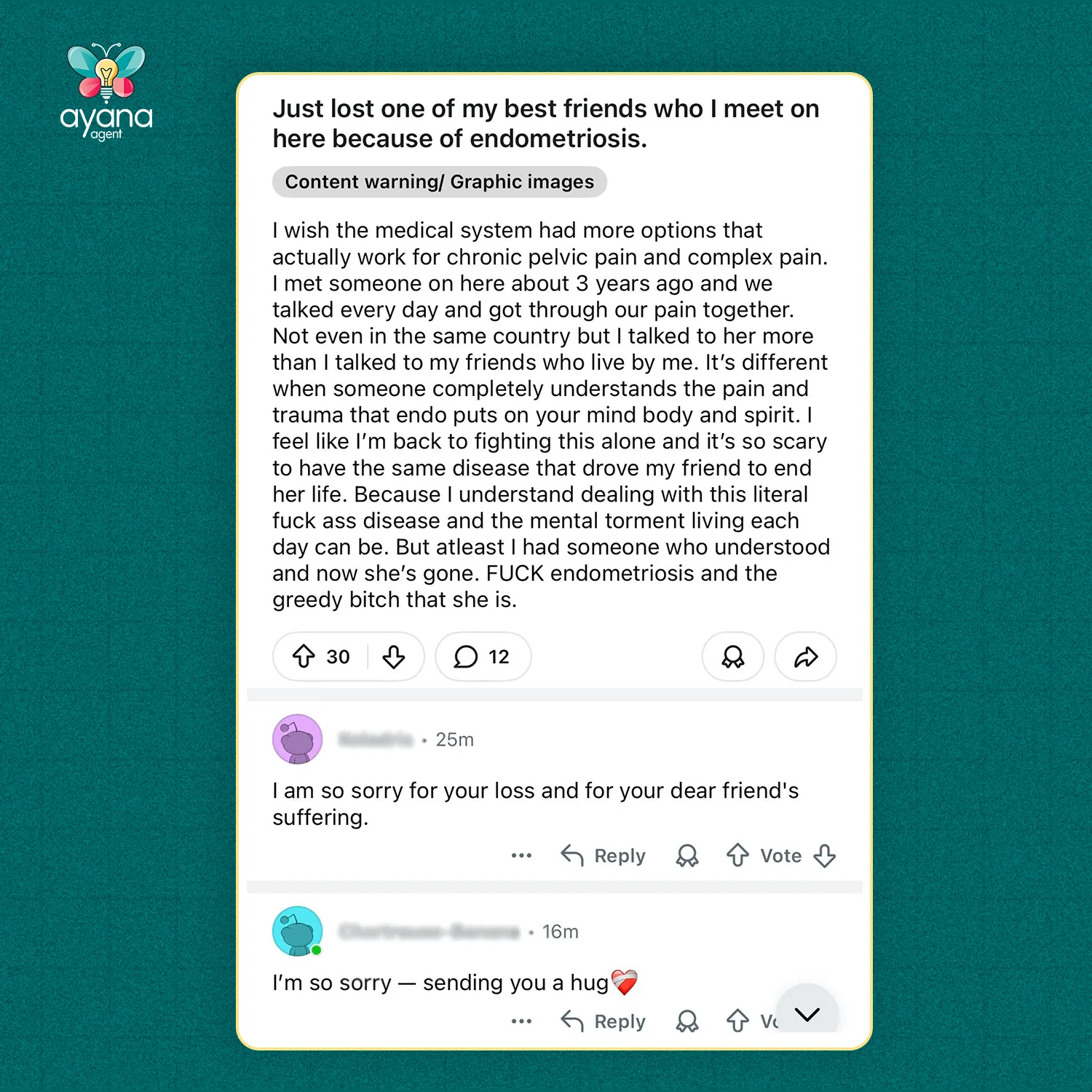
It was a loss. Or a diagnosis nobody was ready for. Or a woman writing at one in the morning that she has spent four years being told the pain is normal and she no longer knows whether to trust her own body. Those posts collect hundreds of comments and thousands of readers, because that is what people do around pain they gather.
Which creates a specific and predictable failure. If a brand's system for finding conversations sorts by engagement, that post arrives at the top of the queue on Monday morning. It looks like the opportunity of the week. And sooner or later somebody who has a quota posts a product mention into it.
That is not a judgement failure by the person who posted. It is a design failure in what they were handed.
Why she is in the thread at all
Women arrive in these communities carrying a documented experience of not being believed, and any brand participating there is participating in the aftermath of that.
This is not a soft claim. There is a clinical literature on it, and a term for it: symptom invalidation. Researchers studying endometriosis diagnostic error have built formal analyses around responses to a single prompt, asking patients to describe an interaction with a clinician in which they felt their symptoms were dismissed.
The numbers around delay are worth having in front of you.
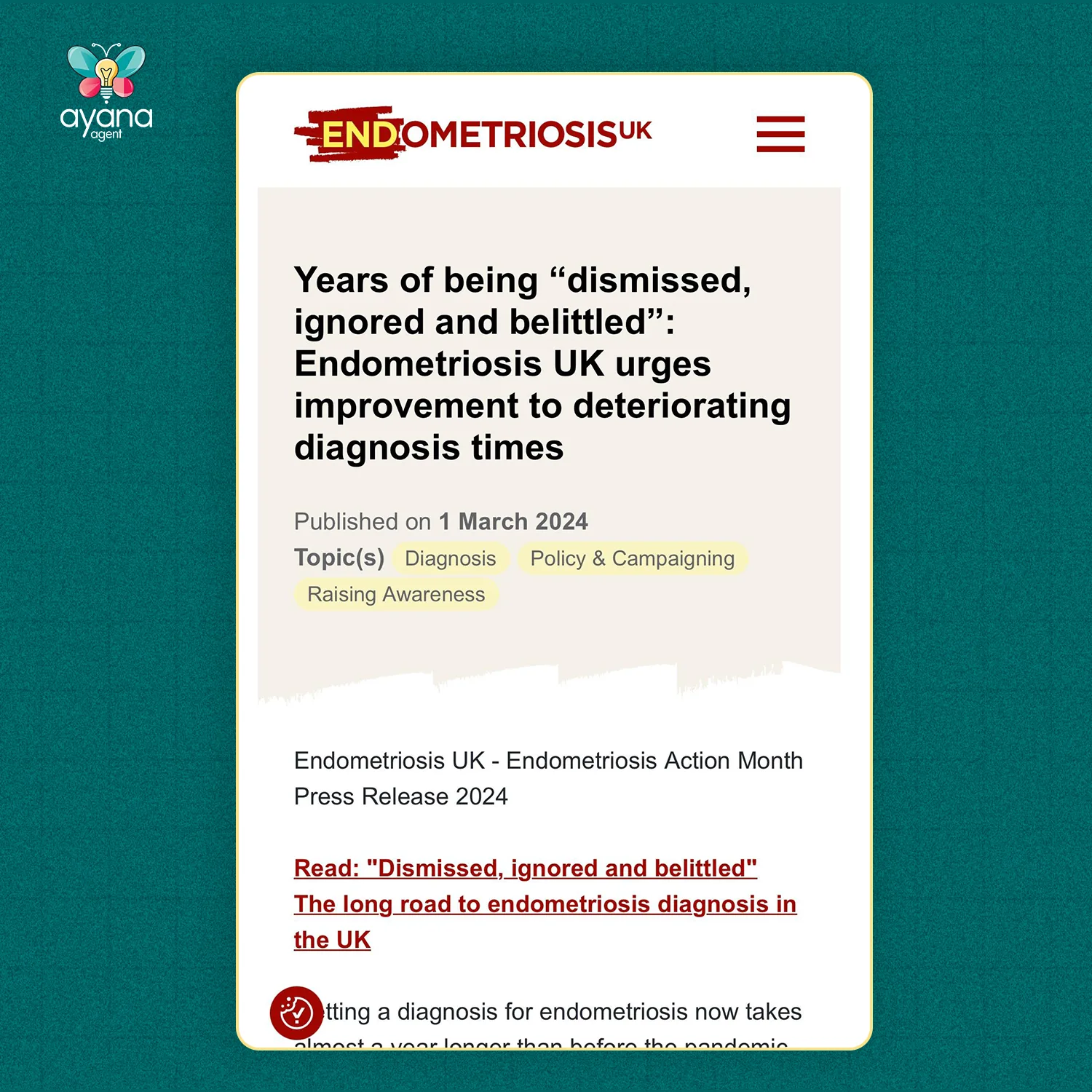
- Studies place average diagnostic delay for endometriosis between roughly 6.6 and 12 years depending on population and method, with one scoping review reporting a range from 1.5 to 11.3 years across included studies.
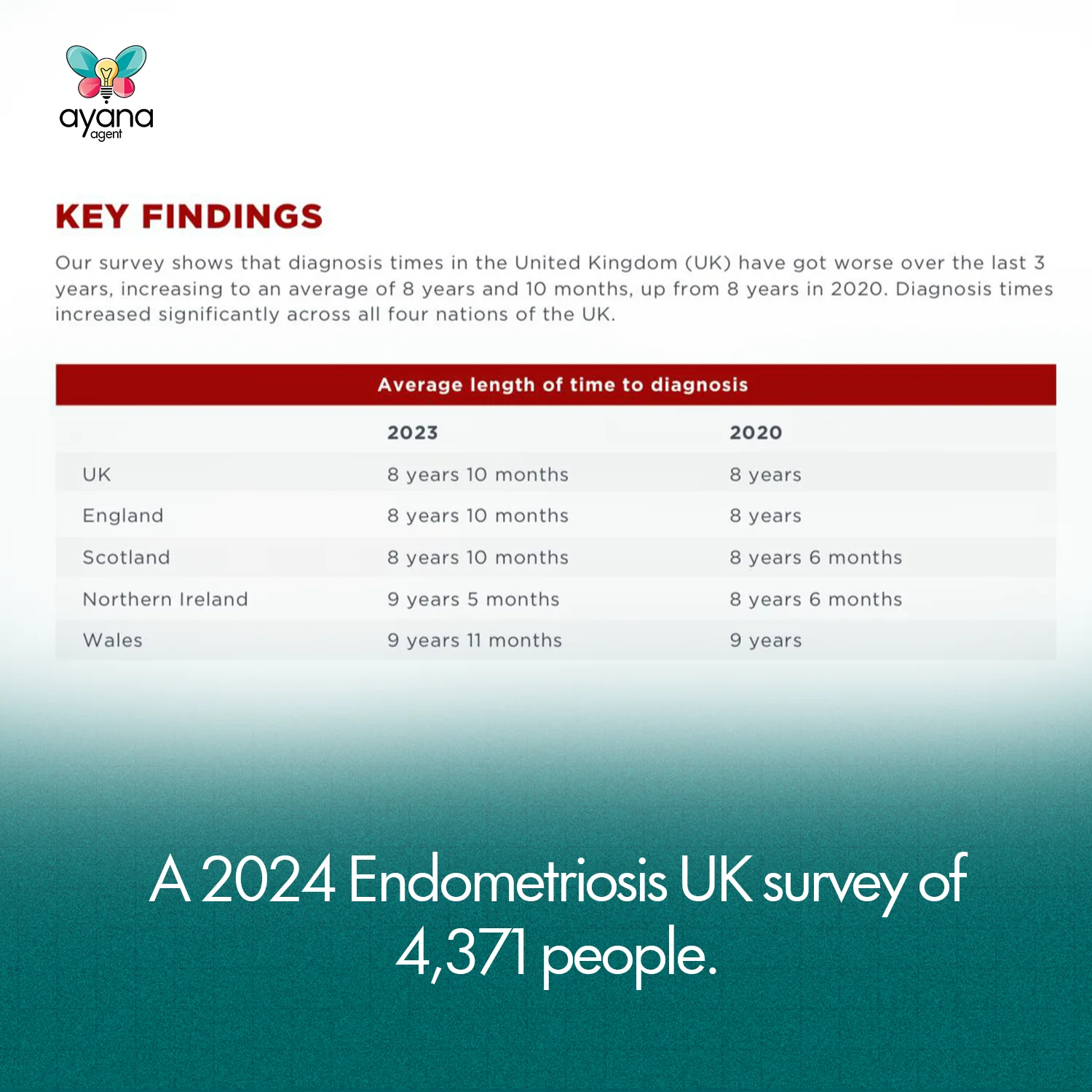
- A 2024 survey of 4,371 people by Endometriosis UK found average diagnosis time in the UK had reached 8 years and 10 months, which was 10 months longer than in 2020. The delay is getting worse.
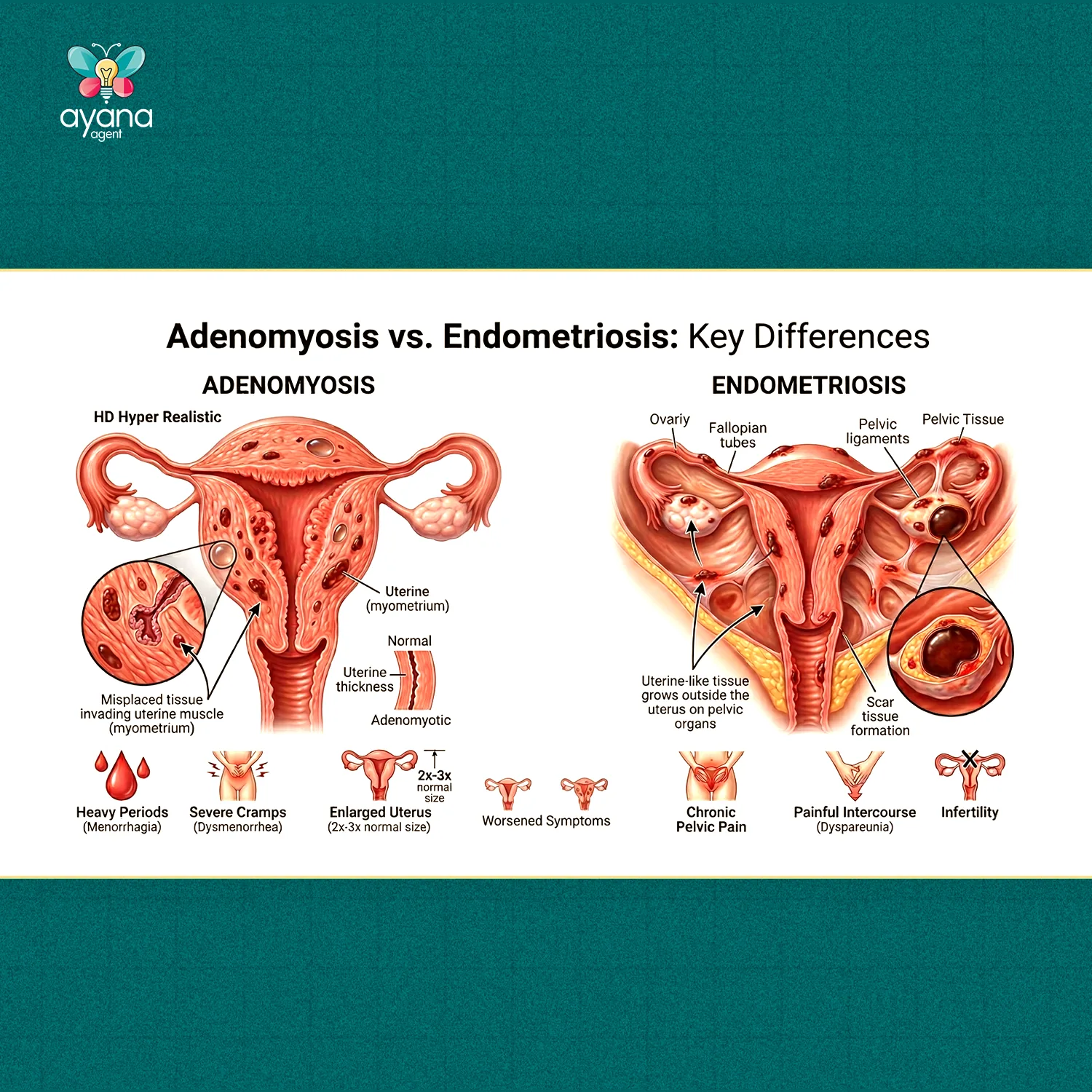
- A study published in the Journal of Women's Health in February 2026 reported average delays of 10 years for endometriosis and 11 years for adenomyosis in a large French cohort.
- A New Zealand survey found a mean delay of 8.7 years, and that patients saw five doctors on average before receiving a diagnosis.
- Research on the causes finds that symptoms are normalised not only by clinicians but by patients and their families, and that general practitioners in focus group work described feeling insufficiently informed about menstrual symptoms and therefore reluctant to refer.
Five doctors. Nearly nine years. Then she posts in a subreddit.
Read the sequence and the thread stops looking like a marketing surface. It is a second-opinion channel that exists because the first opinion did not work. She is there because someone talked instead of listening.
A brand that arrives and talks is repeating the injury with a logo attached.
Reach and fit are two measurements, and most systems only have one
The tone problem in community marketing is usually described as a tone problem. It is more often an architecture problem, because a single relevance score cannot represent two independent variables.
Consider four posts.
A grief thread has high reach and no product fit. A quiet question from one person about a specific test result has low reach and high product fit. A comparison thread where three people are choosing between options has high reach and high product fit. A tangential post that mentions the category in passing has low reach and low fit.
Compress those into one number and the ordering becomes incoherent. The grief thread and the comparison thread score similarly, for opposite reasons. Whoever works the queue then has to reconstruct the distinction by instinct, at speed, dozens of times a week.
Score product fit and reach separately, and display them separately. Then a reviewer can see immediately that a post is worth reading and worth answering and worth answering with no product mention at all. The decision stops depending on how careful a particular person is feeling on a particular Tuesday.
This sounds like a minor product detail. It is the difference between a system that occasionally embarrasses a brand and one that does not.
The six moments
Most conversations in a women's health community fall into six recognisable types, and the correct response differs in each one, including whether the product is mentioned at all.
| The moment | What she is actually asking for | Does the product belong |
|---|---|---|
| The dismissal. A clinician said it was normal, or stress, or weight. | To be believed, and something usable at the next appointment. | No. Almost never. |
| The specific question. A test result, a term, a number she does not understand. | Precision, in plain language, including the limits of what is known. | Only if the product is literally the answer. Usually it is not. |
| The comparison. Two or three options, and a decision pending. | An honest comparison, including where each one loses. | Yes, with disclosure. This is the buying moment. |
| The confident error. Someone is wrong, others are agreeing, and it could cause harm. | A correction with a source, from someone with no obvious stake. | No. A correction that pivots to a product stops being a correction. |
| The grief thread. Loss, a failed cycle, a serious diagnosis. | Nothing from a brand. Possibly six words of acknowledgement. | Never. |
| The crisis signal. Acute distress, self-harm language, an emergency described in real time. | Escalation, not engagement. | Never. Stop and hand it to a human decision. |
Two of six are moments where a product mention is appropriate, and only one of those is common. That ratio is the honest shape of the work.
Reddit's own cultural norm is roughly nine genuinely helpful contributions for every promotional one. In an emotionally charged health category, the sustainable ratio is more conservative than that, not less.
One practical note on the moments where the product does belong. Where a reply recommends the brand, the commercial relationship needs to be visible, either by posting from an identifiable brand account or by opening with a plain line stating the affiliation. Under the endorsement rules the brand carries responsibility for claims made on its behalf, and disclosure is the cheapest form of protection available. It also performs better. In a sceptical community, a disclosed affiliation followed by an honest comparison reads as confidence. An undisclosed one, once noticed, ends the account.
What the difference looks like
The moment. A woman writes that her doctor called her cycles being irregular at 37 just stress, told her to come back in six months, and that she has had three periods in the past year. She ends with a question: is she overreacting.
The reply that fails. It opens with warmth. It says that sounds frustrating and that she deserves answers. Then, in the third sentence, it turns: many women in her position find hormone testing useful, and here is what the brand's panel covers, with a link.
Nothing in that is false. Everyone reading it can see the hinge. The empathy was a runway, and once a reader notices that empathy was instrumental, every future reply from that account is read as instrumental too. That is the durable damage, and it is not repaired by a better reply next week.
The reply that works. It says she is not overreacting, and that three periods in a year at 37 is the kind of specific detail that changes a conversation with a clinician. It names what is reasonable to ask about at a follow-up. It mentions that come back in six months is a common holding pattern and that going in with written dates for the past twelve months tends to move things faster, because a documented pattern is harder to normalise than a description. It wishes her luck.
It does not mention the product. It does not mention the category. It made her more effective in the room she is going into, which is what she asked for.
Then, sometimes, weeks later, she posts a comparison thread. And the account that helped her in March is a credible participant in that one, because it earned the standing to be.
The part that is uncomfortable for a growth team
If this is done correctly, the majority of the best work will be invisible in a conversion report.
The reply that made a woman more effective at her appointment produced no click. The correction that stopped a piece of misinformation spreading produced no lead. The decision not to post into the grief thread produced nothing at all, and it was the highest-value decision made that week.
This is a real problem and it deserves a straight answer rather than a reframe. The answer is not that these things are unmeasurable. It is that they are measured with different instruments, on a longer timescale: reception in the community, unprompted mentions by people who are not you, branded search against a baseline, and the one question on a signup form asking how someone heard about you. That is a separate argument and this series makes it separately.
What matters here is the sequencing. A brand that requires each reply to justify itself commercially will produce the reply that fails, every time, because that is the only kind of reply that can pass the test. The standing has to be built before it can be spent.
A note on what we do
We build and run the Ayana Agent for brands in categories like this one. Two things in it exist specifically because of the argument above. Product fit and reach are scored and displayed separately, so a reviewer can see at a glance that a conversation deserves an answer with nothing promotional in it. And every draft goes to a named person on the client's team who approves, edits or discards it, because the six-moment judgement is exactly the kind of judgement that should sit with a human who knows the brand.
The measure we care about is not how many replies went out. It is whether the community was better off for them.
See whether your category is one we can help with.
A fit call is a short, direct conversation about your communities, your compliance constraints, and whether a human-approved agent is the right instrument for the channel.
Diagnostic delay figures are drawn from the published studies and surveys named in the article, as of early 2026. This article is not medical advice.